Designing a Better Gig Driver Experience
Building a unified platform that helps drivers evaluate jobs faster, understand earnings clearly, and make better decisions.
Mobile Product Design • Feature Strategy • UX/UI Design
used across multiple gig platforms
Go-to earnings & job tool
to evaluate jobs
Minutes → Seconds
Context
Para is a gig driver app built around a simple mission: put more money in drivers’ pockets.
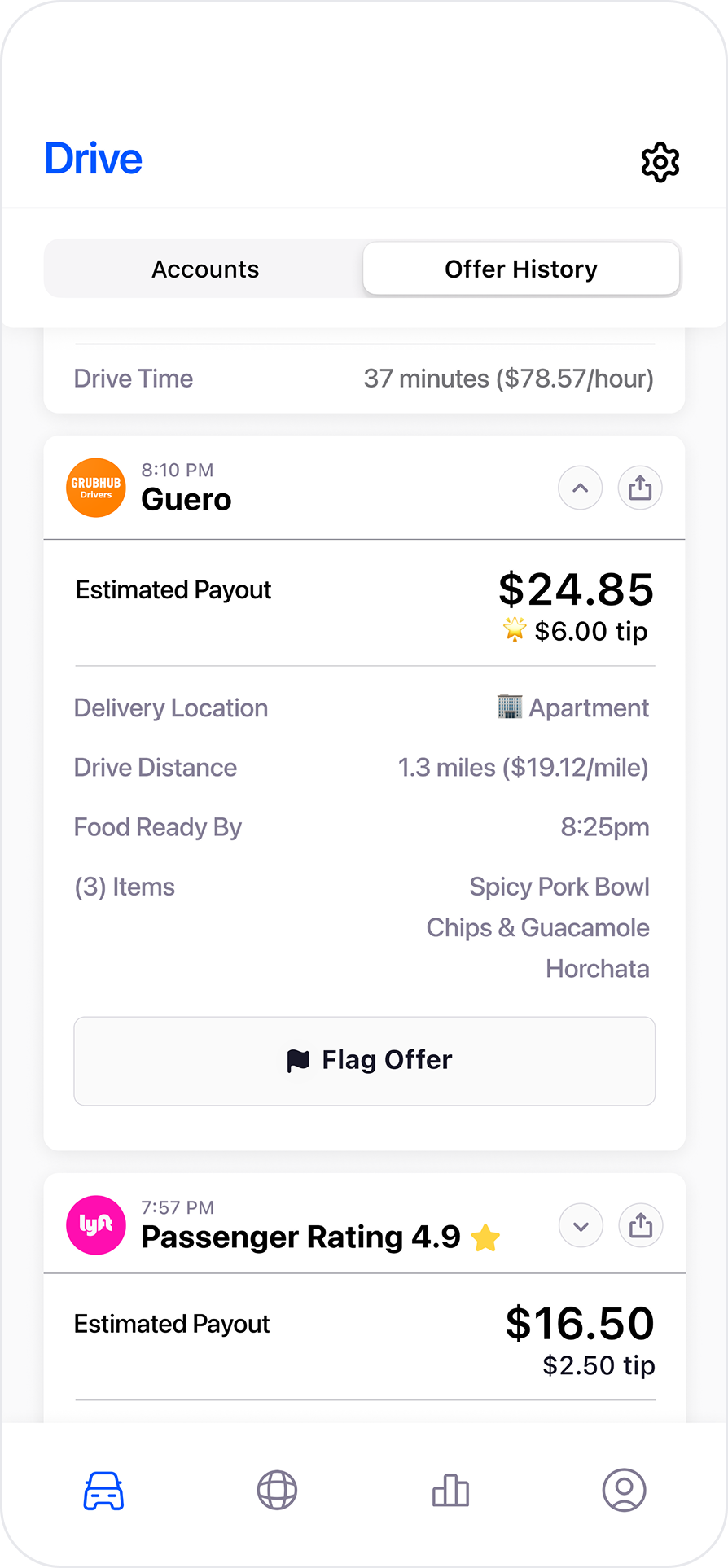
During the pandemic, delivery demand surged. Para gained rapid traction by revealing true driver payouts that platforms like DoorDash were intentionally obscuring. This transparency empowered drivers to decline low-value jobs and make better decisions with their time.
The product went viral and quickly reached hundreds of thousands of drivers. I was brought on to lead UX design as the company scaled and explored its next phase.
Problem
Tip transparency was effective, but unstable.
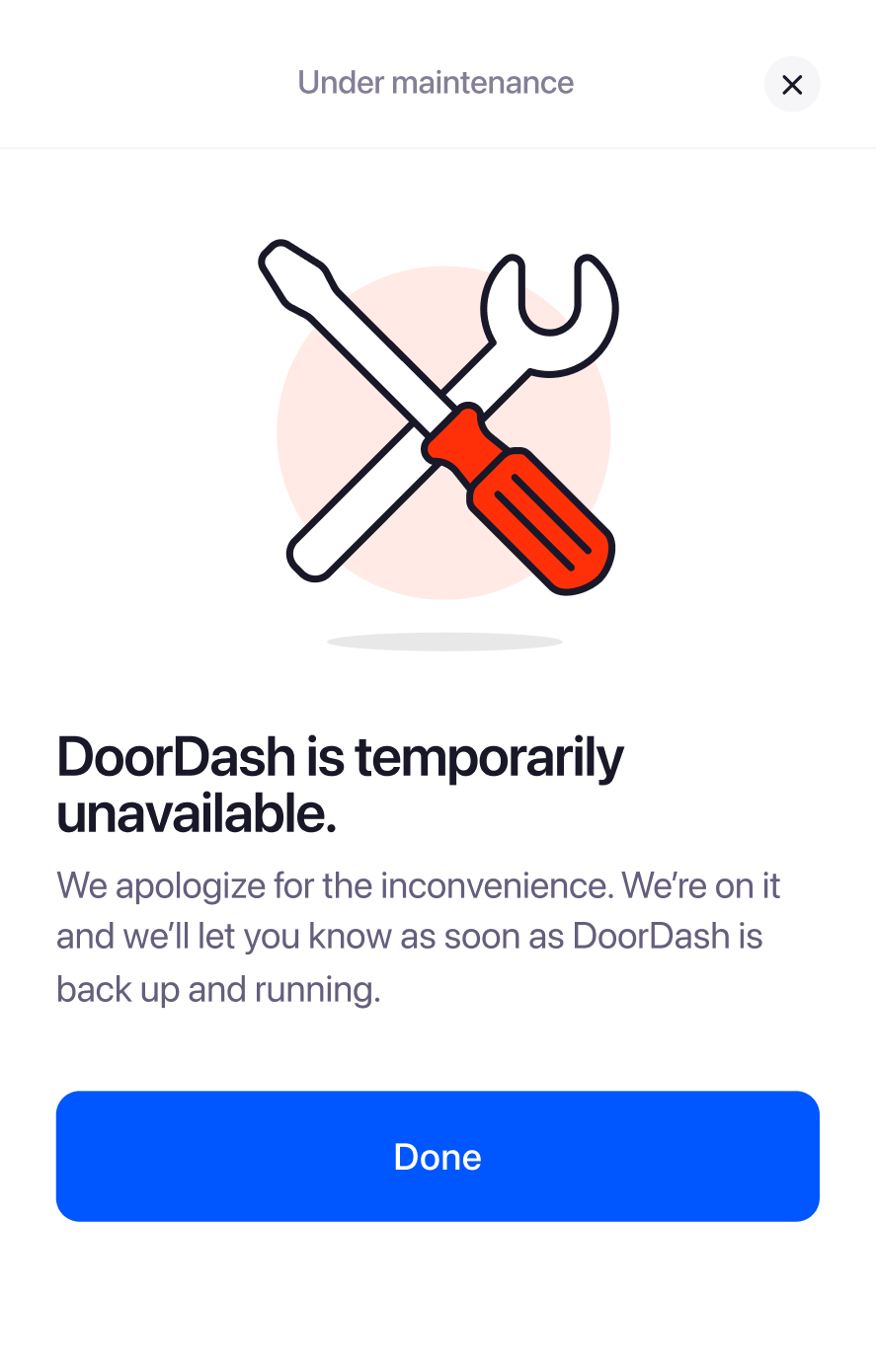
DoorDash aggressively worked to block Para’s methods. Each workaround triggered another shutdown. At the same time, the app had grown organically under pressure, resulting in fragmented flows and growing confusion for drivers.
What began as a focused utility had become difficult to navigate and increasingly fragile as a business.
Opportunity
Para expanded beyond tip transparency to create new earning opportunities.
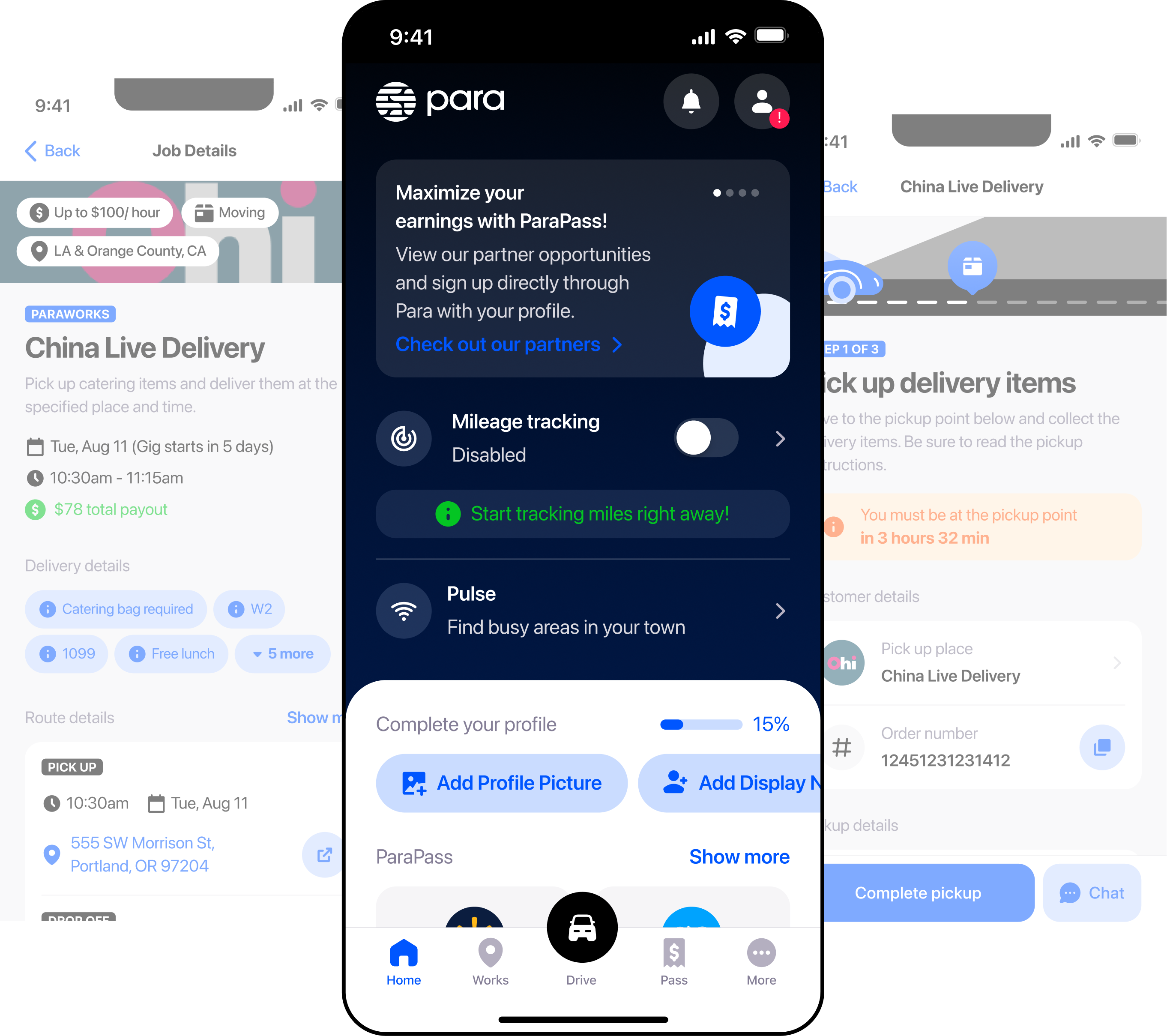
ParaWorks connected drivers with catering and small business deliveries. ParaPass allowed drivers to claim warehouse shift work. These opportunities required driver vetting, including licenses, insurance, and background checks.
The opportunity was clear: build a system that supported higher-value work while making the experience easier for drivers and the business to operate.
Approach
We grounded the redesign in research and collaboration.
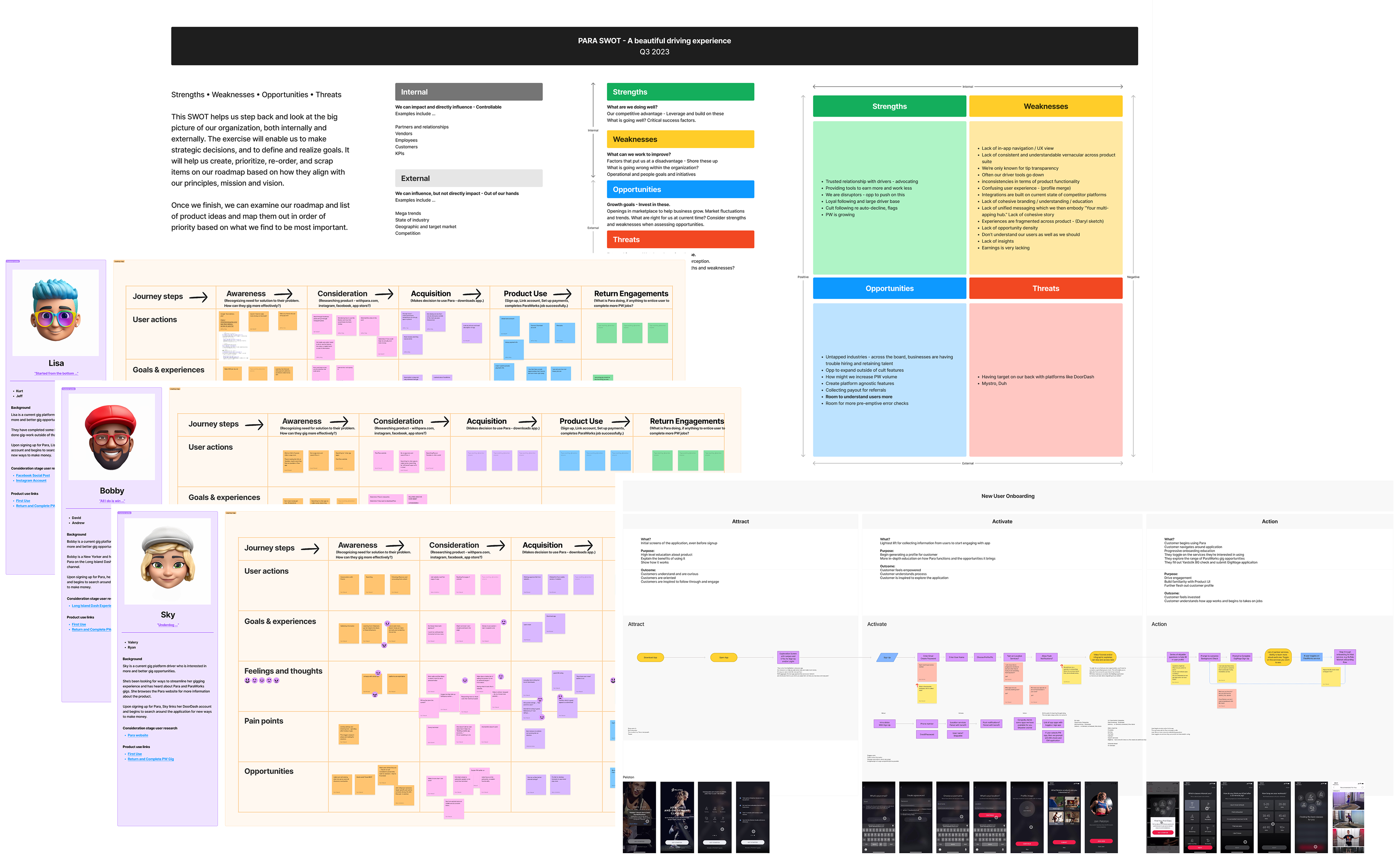
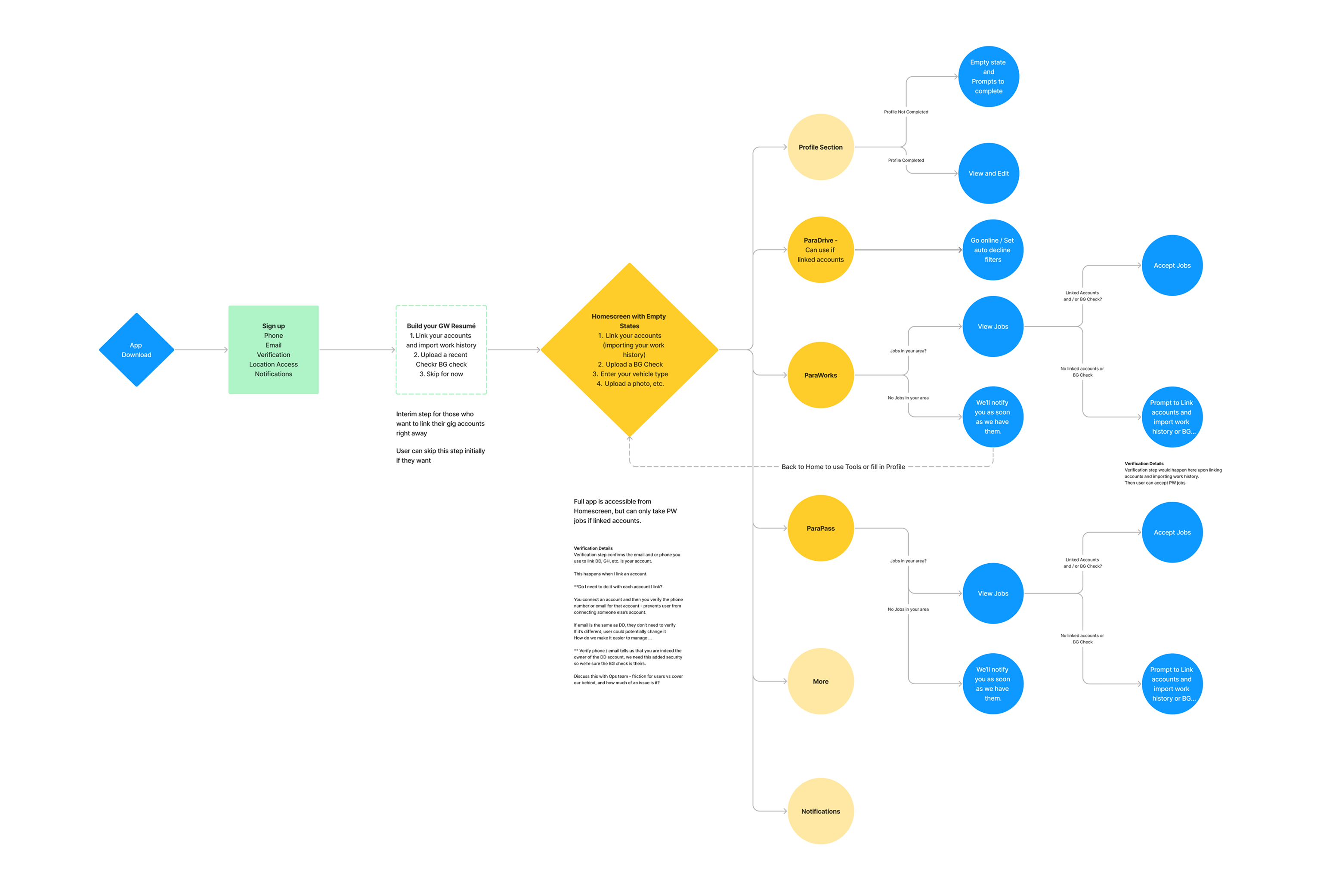
We interviewed drivers, mapped end-to-end journeys, and audited products inside and outside the gig economy. We studied apps with strong onboarding and profile management patterns and ran workshops to clarify value propositions and constraints.
The focus was clarity, speed, and trust at every step of the experience.
Solution
We rebuilt the product around three connected experiences.
Together, these systems replaced a fragmented app with a cohesive foundation built to scale.
Accept and deliver
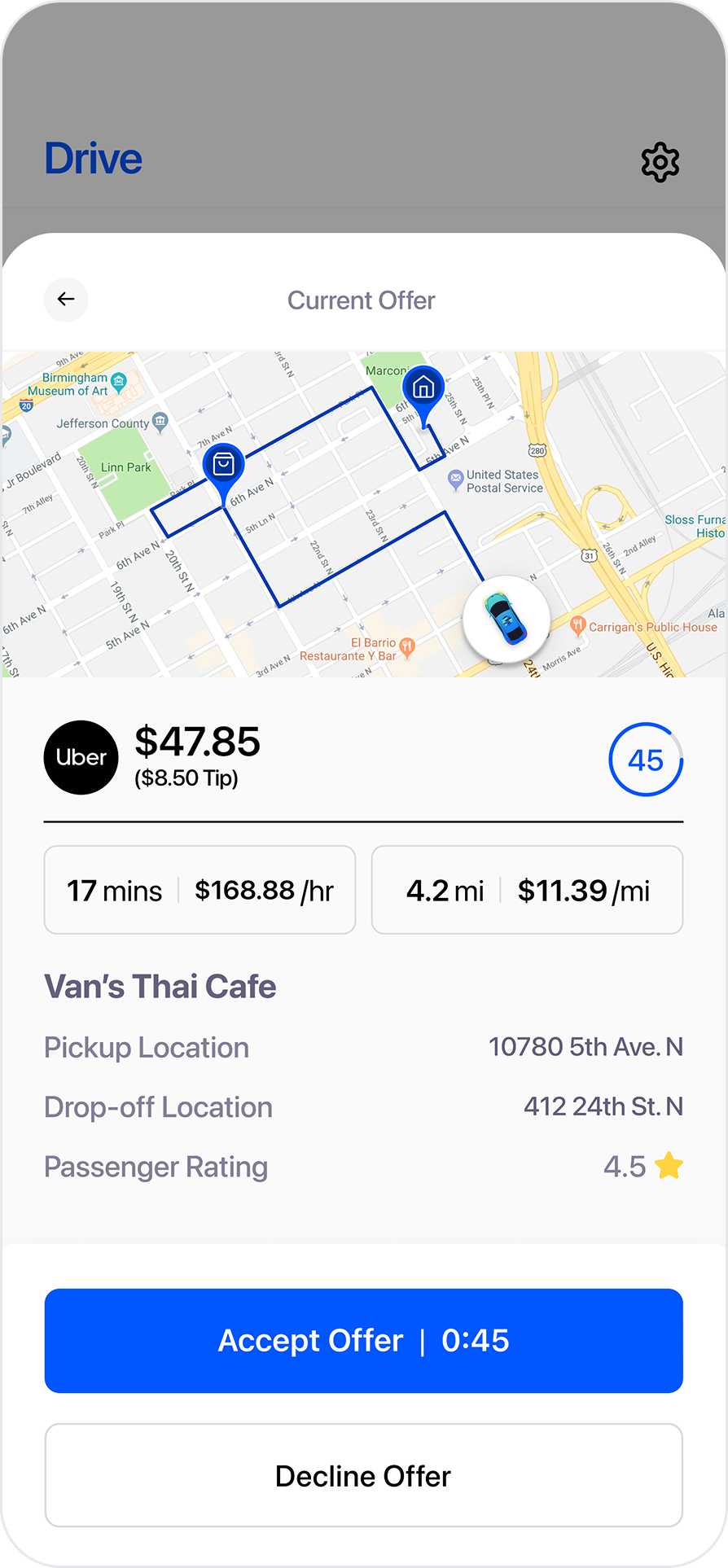
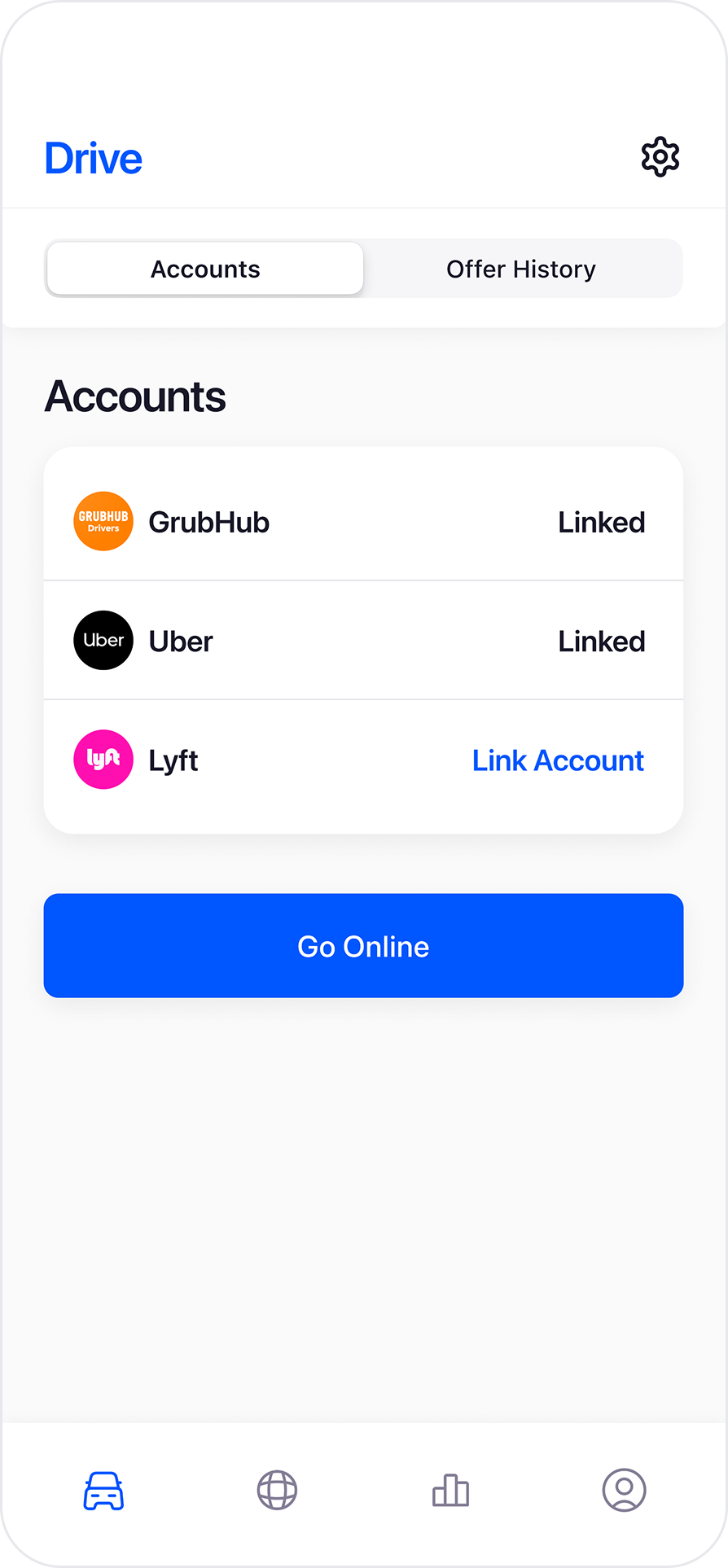
Drivers can accept jobs, queue work, and complete deliveries in one continuous flow.
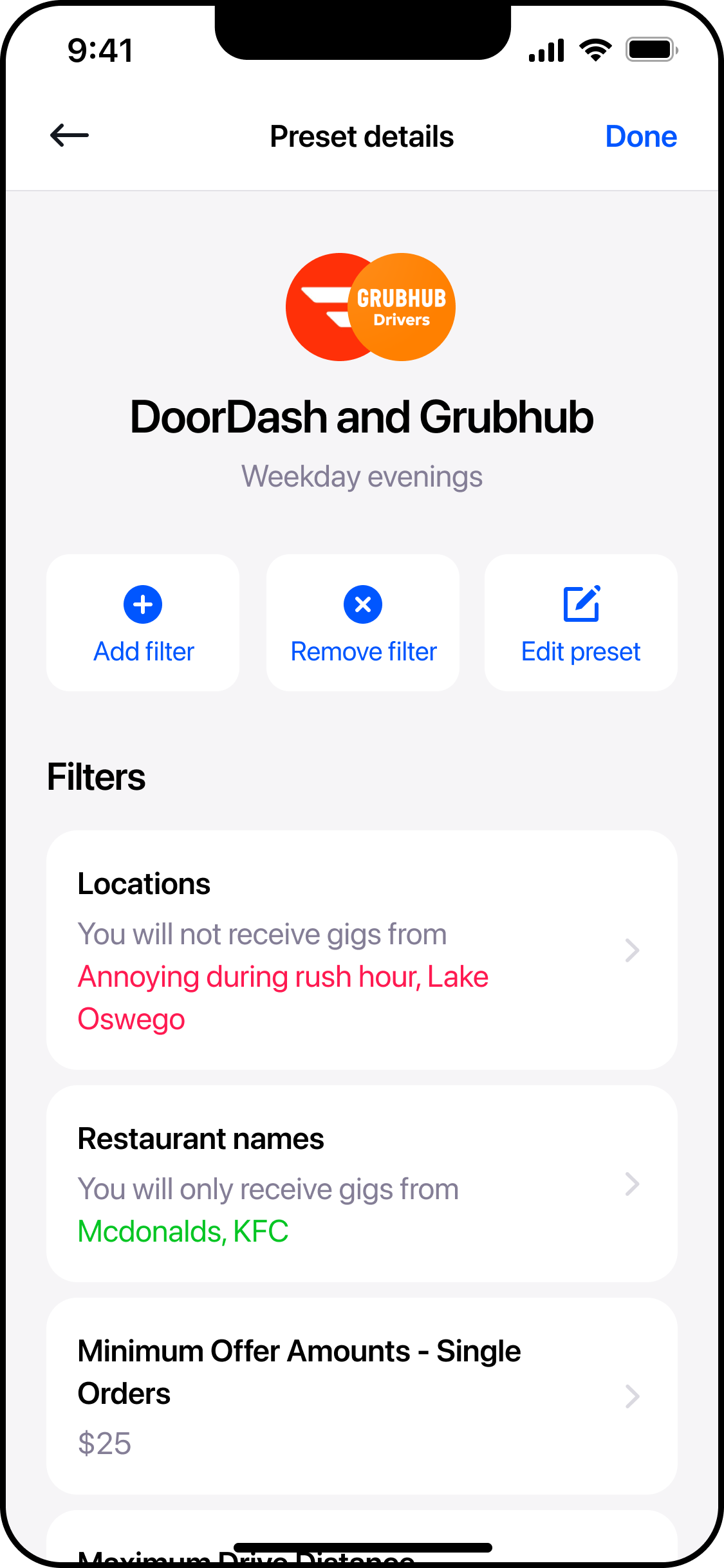
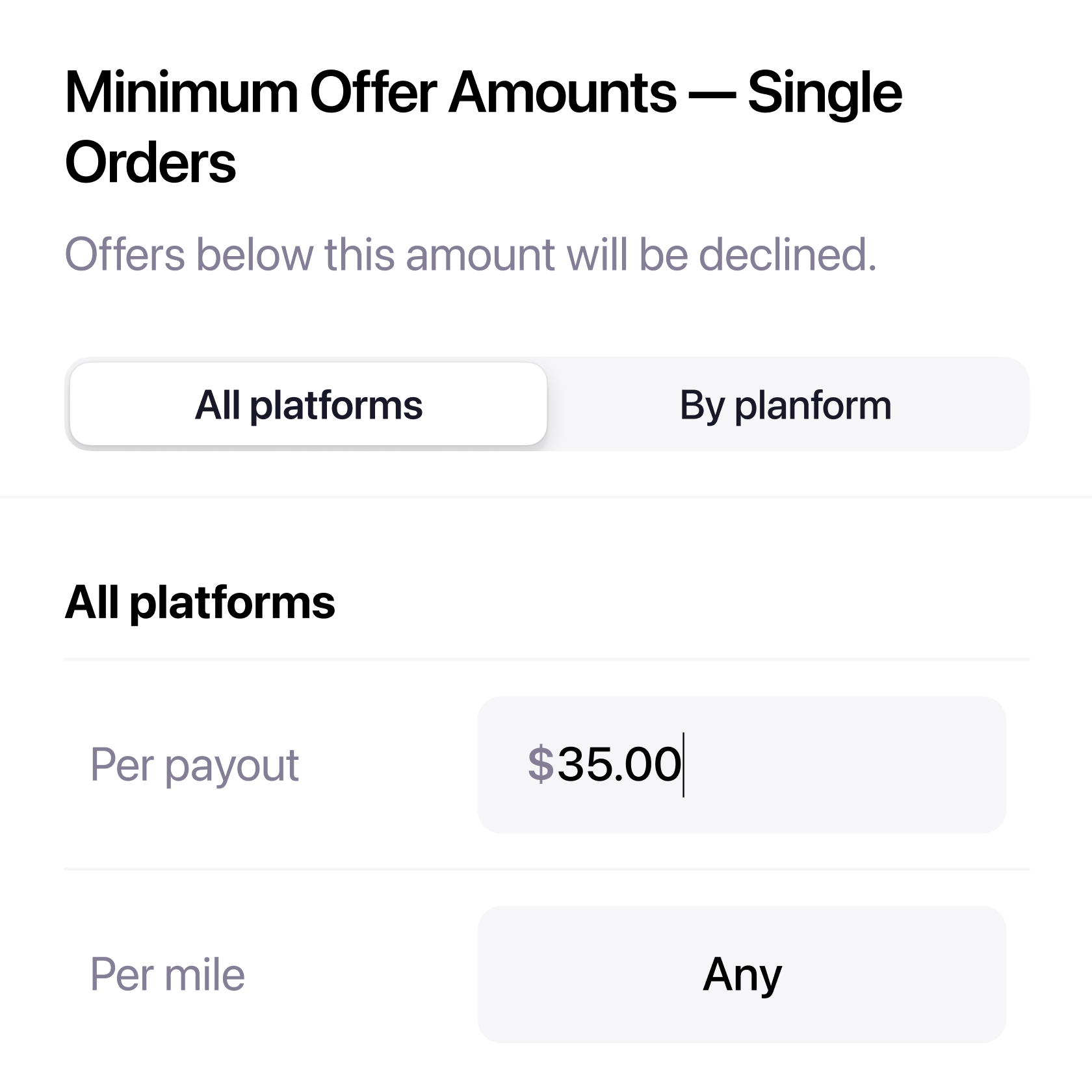
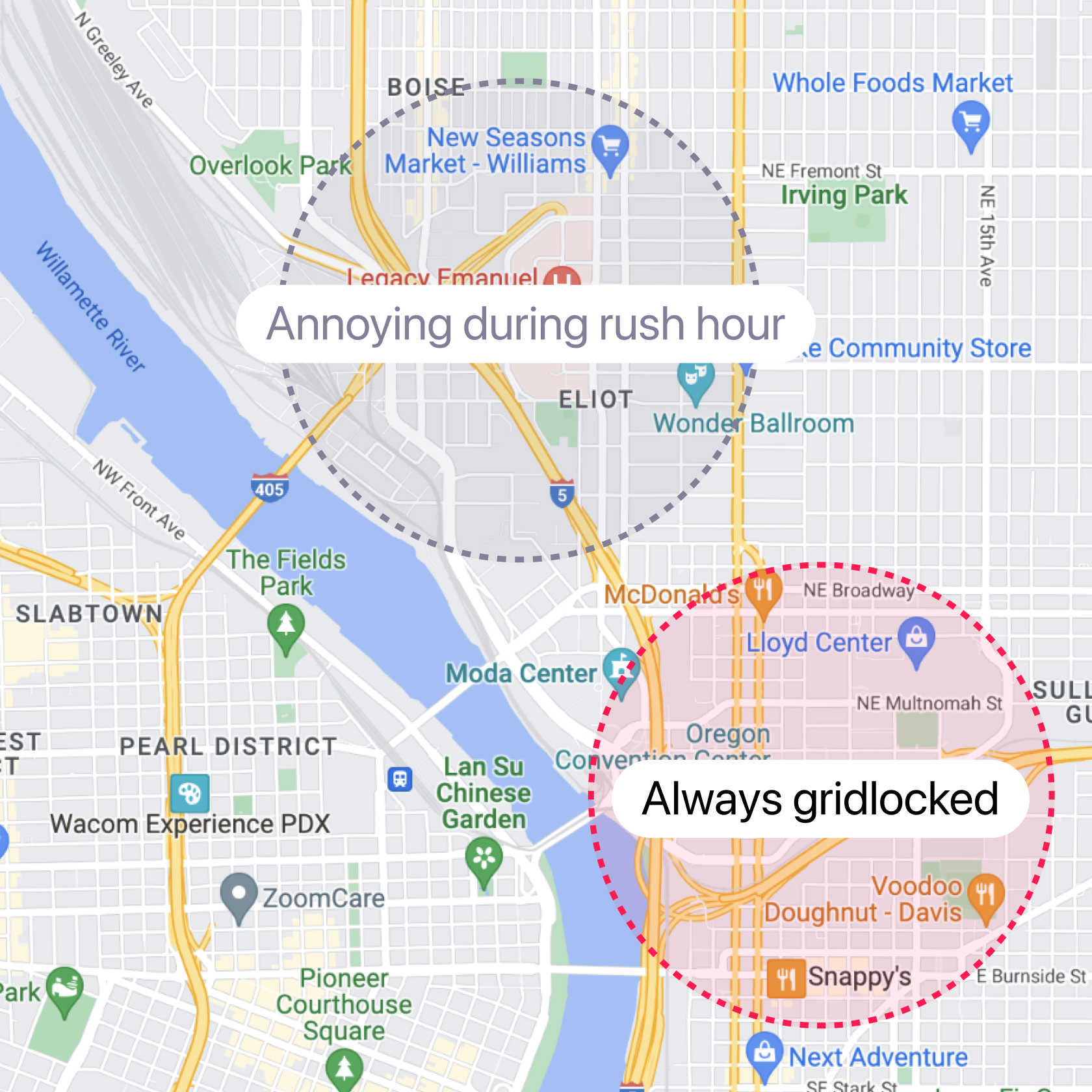
Auto Decline preferences
Auto-decline rules reduce noise and protect driver earnings without constant attention.
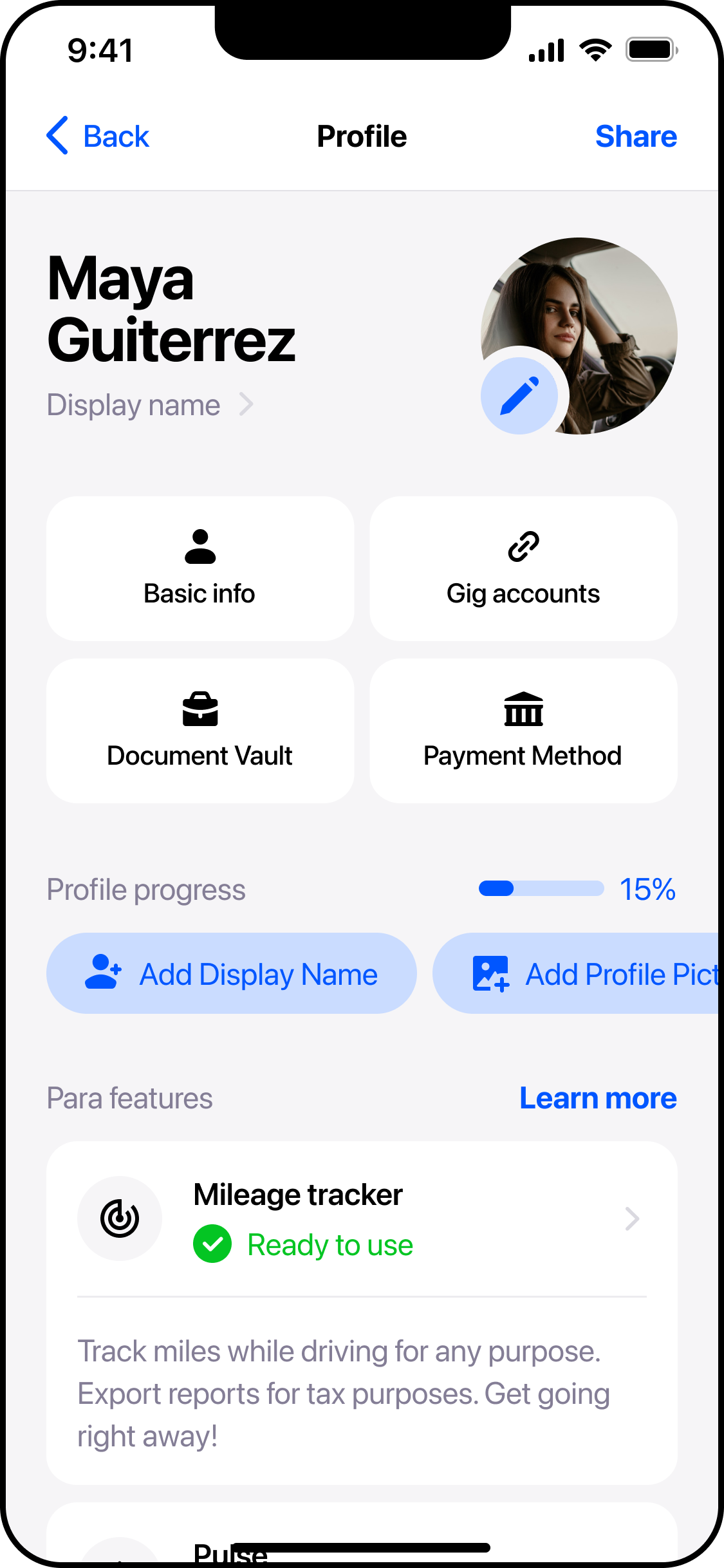
Profile onboarding
A centralized profile gives drivers visibility into performance, preferences, and status.
Auto Decline filters like minimum offer amounts automatically decline trips under a certain pay point. These filters are easily edited and/or toggled on and off depending on driver preferences in the moment.
The geo-location filter allows drivers to refuse trips from certain areas at certain times. Inversely, drivers can choose to only receive offers from their selected areas.
Para Drive allowed drivers to go online with confidence.
Custom filters and presets automatically declined low-value jobs, helping drivers focus on work that made sense for their time and earnings.
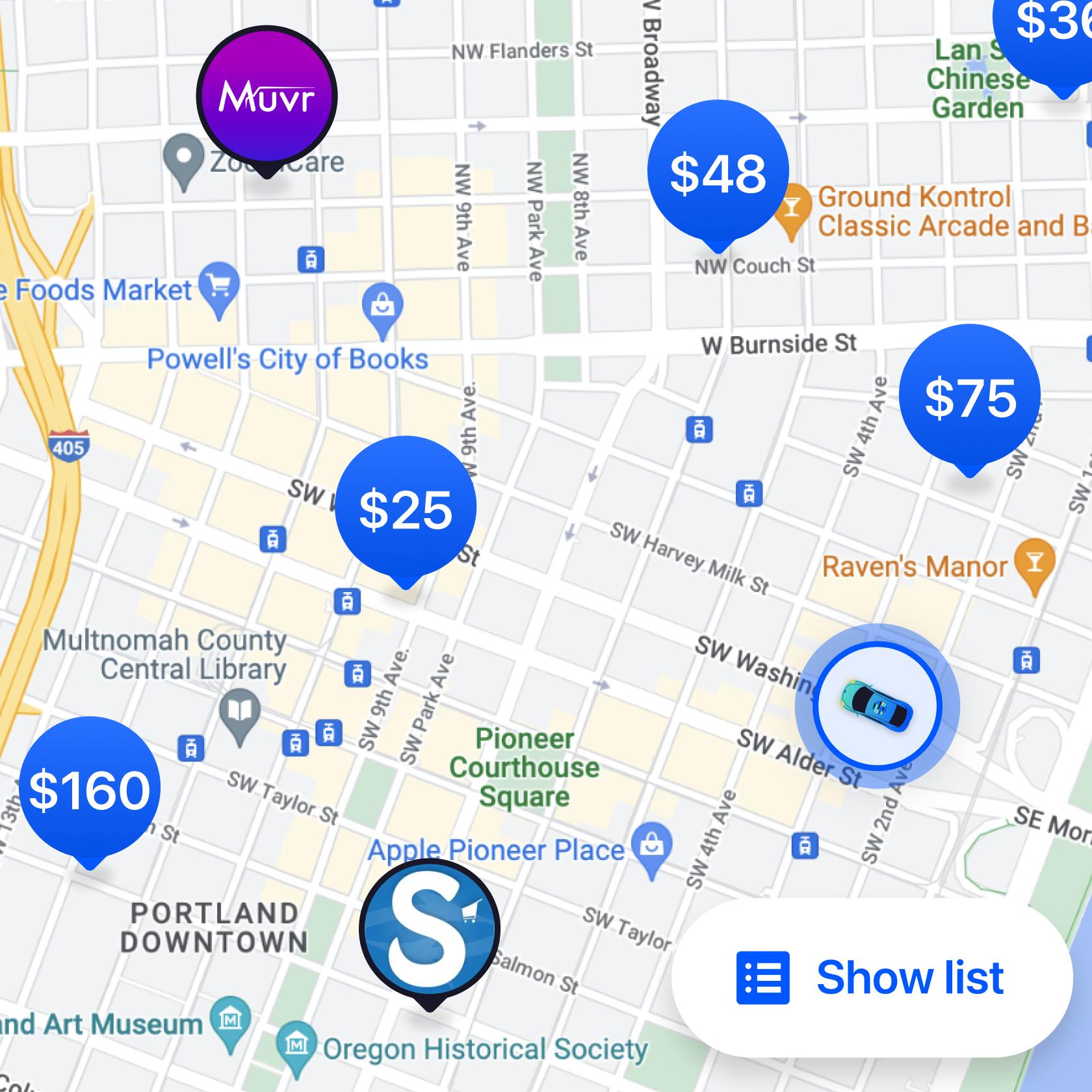
Users can view offers through an interactive map to quickly pick gigs that are nearby, or view and filter opportunities via the list/feed view.
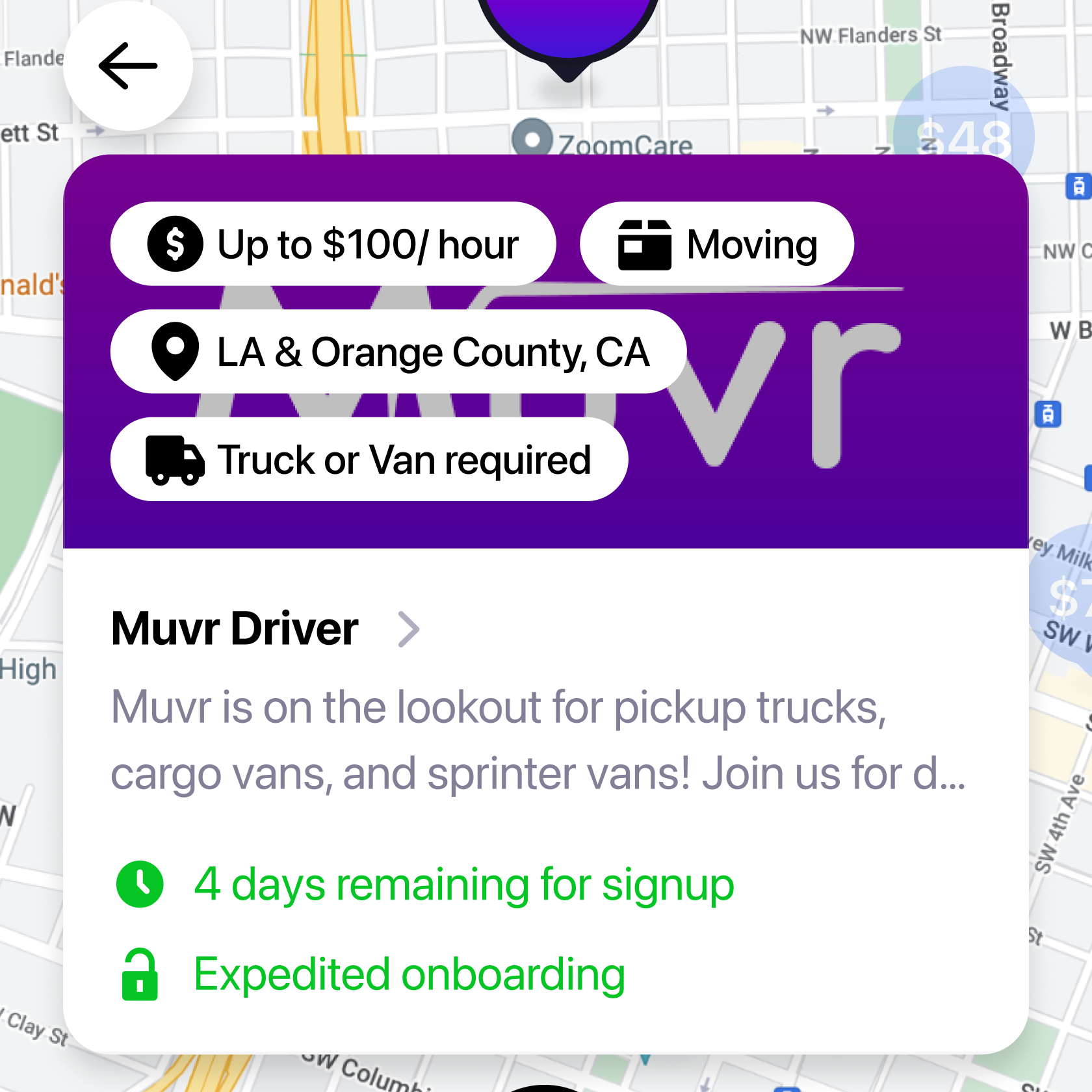
Tapping on an offer on the map view brings up the gig overview card. Users can then click into the full details and accept offers if they align with their preferences.
A unified map and feed experience made opportunity discovery fast and intuitive.
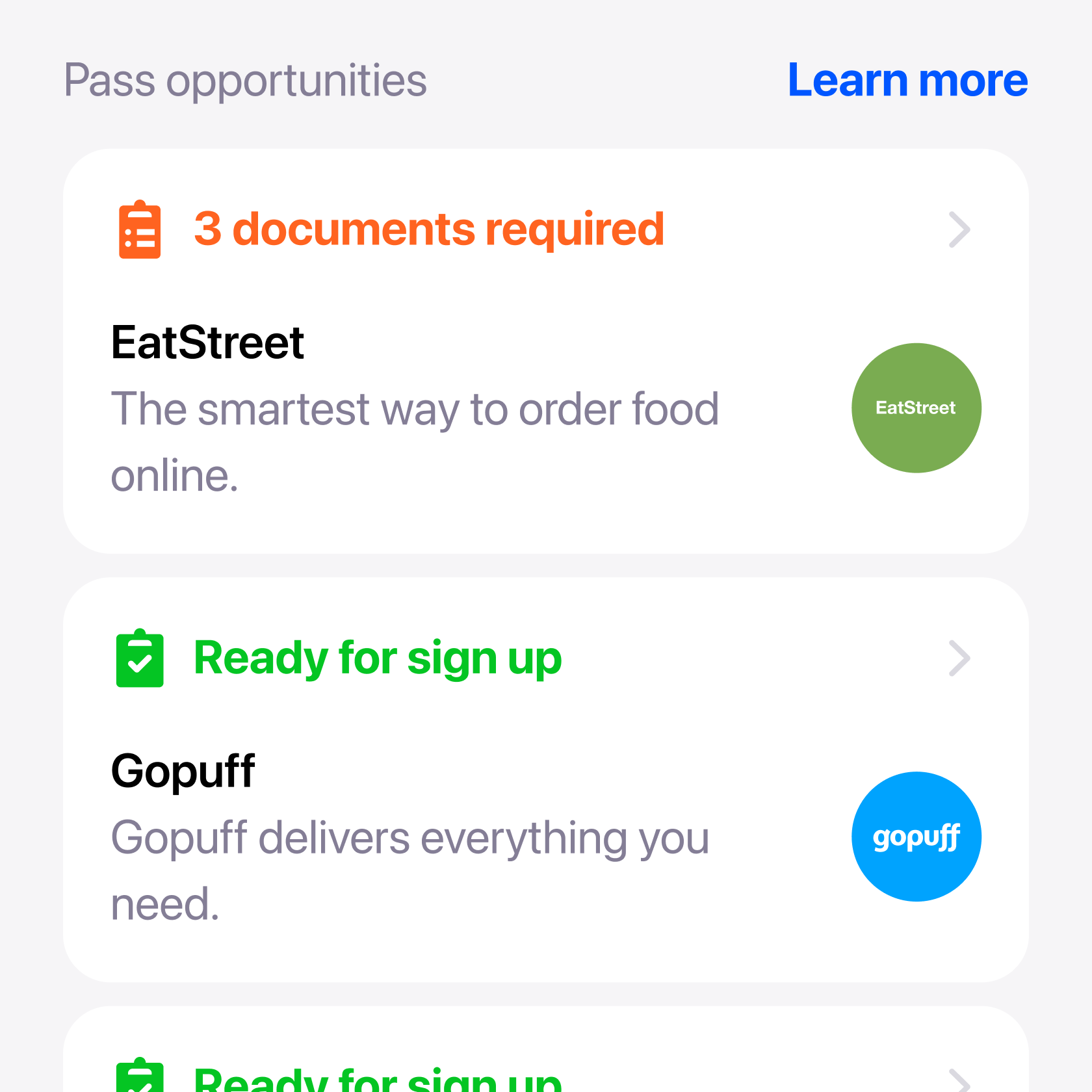
Drivers could quickly evaluate catering and warehouse jobs, understand requirements, and claim work without friction.
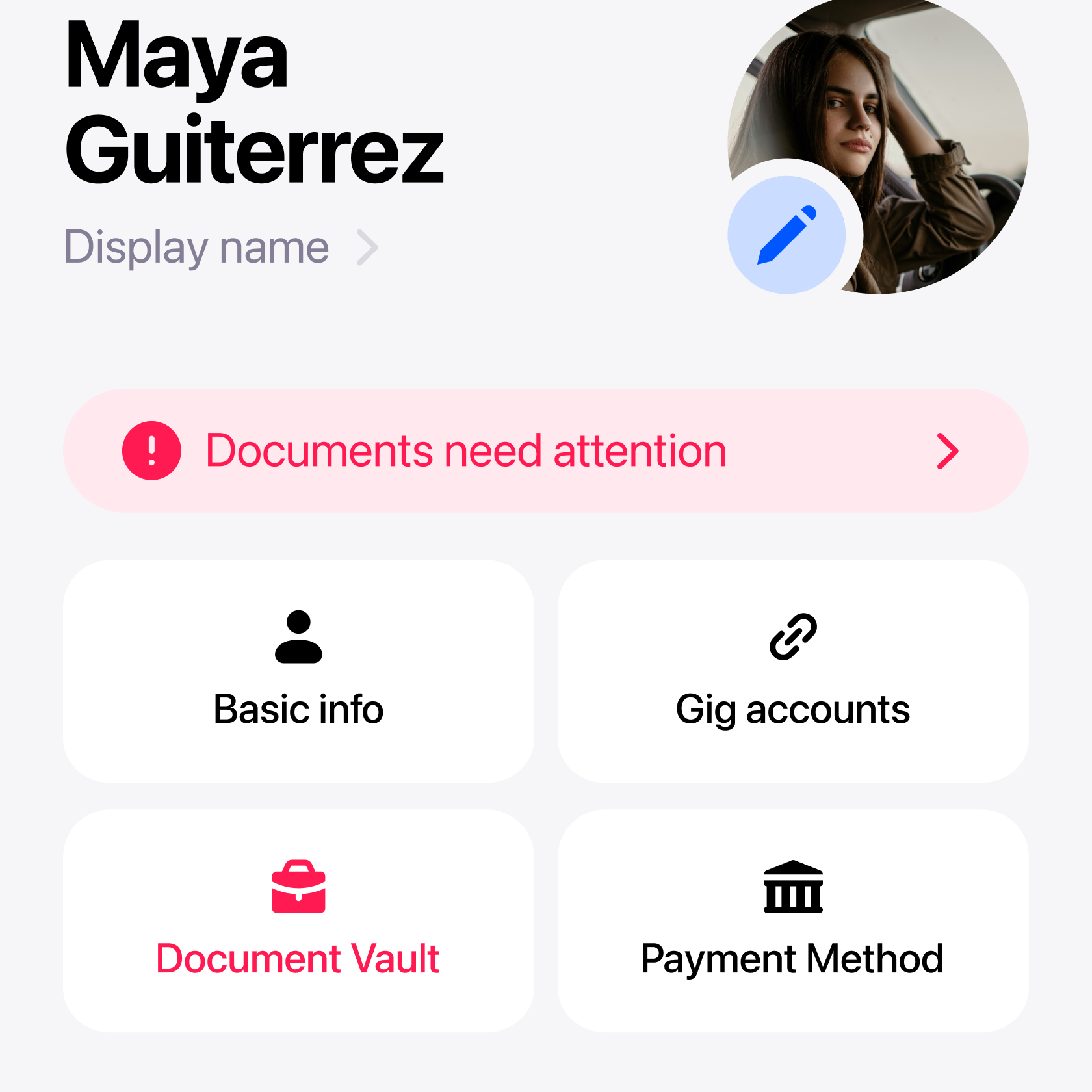
Clear affordances within the profile view guide users to complete necessary components and fix errors or unlinked accounts.
Clear requirements guide users towards opportunities they’re instantly eligible for, vs. those that require more documentation.
The redesigned profile simplified onboarding and documentation.
Drivers could upload, track, and manage required documents in one place. Clear status indicators reduced errors and removed a major operational bottleneck.
Impact
Drivers onboarded faster, avoided low-value work, and spent more time earning.
Operational overhead dropped significantly as verification workflows became predictable and manageable. The team could scale without burning out.
“I use Auto Decline every day for UberEats on my iPhone. It is saving my finger. Loving it!”
– Shiva Hari Khatiwada
“Thanks, ParaWorks! Made $69.20 for a 4.5 mi ride - easy money in half hour!”
– Shiva Hari Khatiwada
“Location geofilters are awesome! I use them to filter out downtown parking, inside-mall restaurants, and orders to a military base. Saved my skin many times!”
– Shiva Hari Khatiwada
Reflection
Working with Para was a highlight.
We transformed a confusing, fragile product into an intuitive system that respected drivers’ time and supported the business behind it. It was a clear example of how thoughtful UX can unlock both human and operational value.